HMDD Measured Against Other Streetwear Labels: In What Way Does It Stack Up?
In 2026, streetwear as a category is crowded, noisy, and full of labels competing for one common hype wave. HMDD — short for Happy Memories Don’t Die — has built a distinct lane by drawing on sentiment, story-led emotion, and a more understated kind of presence rather than attention-grabbing graphics. Its very name points to the brand’s core idea: memories fade, but what they made you feel shouldn’t fade too. That philosophy shows up in the construction, the color choices, and the way HMDD pieces is presented as memory made into clothing rather than mere product. And that’s precisely why this breakdown maps out where HMDD stands next to other streetwear labels, what an honest HMDD review really amounts to, and why shoppers searching for HMDD’s standout pieces repeatedly land on staples like sweatpants and shorts.
A handful of groups now make up the streetwear market: heritage skate labels, logo-heavy hype labels, and leaner independents centered on community and story rather than scale. HMDD sits closer to the third camp. The brand isn’t pursuing luxury-house collabs or overwhelming drops every week. Instead, HMDDLA — the label’s foundation and artistic anchor rooted in Los Angeles — drops product in more limited, more considered batches. This isn’t scarcity built for attention; it’s the result of a brand growing at its own pace rather than manufacturing at scale to keep up with orders.
The Brand’s Guiding Idea: Nostalgia vs. Noise
Most streetwear labels compete on visual noise — bold logos, collab stamps, or temporary hooks meant to catch attention for a brief window. HMDD leans, instead, on emotional depth. The phrase “happy memories don’t die” isn’t just a tagline; it appears printed, stitched, and referenced across the collection as a through-line. That consistency gives the brand a unified identity that’s simpler to spot than labels that redesign their entire aesthetic every season.
That steadiness counts for more than most assume. A shopper who buys HMDD sweatpants www.hmmdla.org in 2025 and returns for shorts in 2026 will recognize the same design DNA — subdued color choices, understated graphic positioning, and a focus on comfort-driven silhouettes. Set that against brands that swing from streetwear to techwear to Y2K revival inside a year, and HMDD’s consistency stands out as a genuine edge. In streetwear, loyalty tends to grow out of predictability like this, not novelty.
There’s also a community layer. HMDD’s marketing leans on storytelling — customer photos, personal captions, and a sense that the garments capture a memory rather than a status symbol. Bigger brands carrying thousands of SKUs find that closeness hard to sustain. Because it’s smaller, HMDD can still respond directly to its audience, which shows up in how quickly feedback from an HMDD review gets reflected in future drops.
Comparing the Products: Where HMDD Really Holds Its Own
When people ask how the HMDD lineup compares, they’re generally sizing up three things: fit, the heft of the material, and price-to-quality ratio. Query data reveals HMDD sweatpants and HMDD shorts as the most-searched categories, hinting that bottoms are doing better than outerwear or accessories for the brand right now. It reflects the larger 2026 streetwear movement, where relaxed-fit bottoms move faster than fitted jackets throughout the space.
Here is a general comparison of HMDD’s positioning against a pair of familiar streetwear archetypes: the high-volume hype brand and the independent boutique brand. This isn’t meant as a head-to-head price battle between specific brands— it’s a structural comparison of how each type typically operates in the current market.
| Key Variable Under Review | HMDD | High-Output Trend-Driven Name | The Under-the-Radar Boutique Name |
|---|---|---|---|
| Drop Rhythm | Tightly rationed, but always deliberate | On a weekly-to-fortnightly cadence | Tied to the seasons, occasional |
| Brand Identity | Emotion-led storytelling built on nostalgia | Emblem-centric, fad-hopping | All over the place, seldom uniform |
| The Types of Product Central to the Range | A lineup of joggers, shorts, and print-heavy upper pieces | Pullovers, jackets and coats, add-ons | Determined by whichever direction the founder leans toward |
| How the Label Connects With Followers | Direct, intimate, feedback-reactive | Mass-scale, impersonal | Personal but restricted reach |
| Where Cost Falls Overall | Middle-of-the-road street fashion | Covering a wide spread, leaning premium much of the time | Moderate to high-end, uneven |
This comparison isn’t trying to declare one outright victor — the streetwear space isn’t a one-size-fits-all category. The point is to illustrate that HMDD’s strategy of controlled scarcity and emotional branding places it in a separate spot in the competitive landscape compared to labels that lean entirely on scale or entirely on niche appeal. HMDD draws structural rigor from the boutique approach while avoiding the unpredictability that often comes with smaller labels.
Fit, What it’s Made of, plus Everyday Wearability
This bottoms category succeed or fail based on fit. Pull them too close to the body and they read as athleisure, or too sleepwear when they’re oversized. HMDD’s take on these two categories favors a easy fit that narrows toward the ankle that works for daily wear rather than strictly workout purposes. It’s a small detail with real impact, because a lot of streetwear sweatpants are cut either too baggy for layering or too fitted for comfort during long wear.
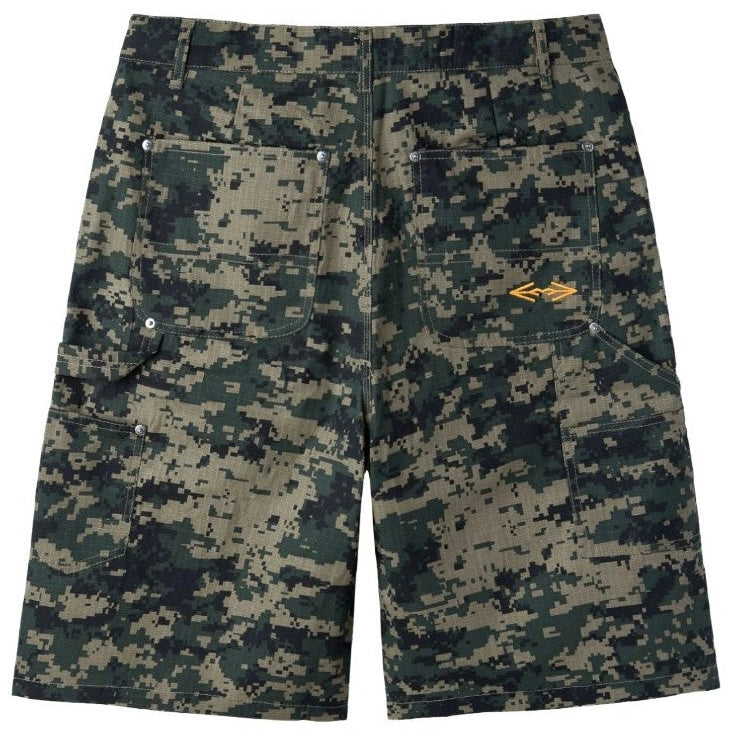
The shorts lineup are built on a comparable approach, namely mid-thigh to knee-length cuts that combine effortlessly with printed tees or roomy layering pieces. This is relevant in a 2026 market where shoppers are leaning into garments that move seamlessly from casual wear to loungewear, as opposed to maintaining separate closets for each purpose. Multiple reviewers point out that HMDD shorts retain their structure wash after wash, which points to fabric weight and construction more than the cut alone.
In the way that HMDD diverges from mass-market competitors comes down to restraint. A lot of trend-driven labels overload sweatpants with side stripes, oversized branding, or multiple logo placements. HMDD generally favors a minimal graphic approach — a small nod to “happy memories don’t die” instead of a dominant chest print. Customers who want identifiable streetwear without resembling a moving ad are won over by that understatement.
What Customers Actually Say
As word of mouth, instead of sponsored promotion, carries the brand forward, query volume surrounding “HMDD review” keeps expanding as more buyers find the brand. The repeated patterns in customer feedback are fairly consistent: comfort rates highly, fit matches to what a loose fit implies, and the meaning-driven branding either connects on a personal level or doesn’t land at all — the reaction is rarely neutral. Such a divide is genuinely a positive signal in the streetwear space, where bland, safe design choices almost never fosters a devoted fanbase.
Common critique points to keep in mind include limited restock availability and narrower size ranges relative to bigger rival brands. Since HMDD doesn’t manufacture at the scale of bigger streetwear names, popular sizes in sweatpants and shorts can move out of stock quicker, which customers need to keep in mind before assuming immediate availability. It’s a compromise rather than a real shortcoming — limited supply is part of what keeps the HMDDLA identity feeling curated rather than corporate.
Overall, the sentiment around HMDD clothing skews toward approval, particularly among shoppers who value substance and comfort over heavy branding. That’s a narrower audience than a brand aiming for widespread appeal, but it’s a more loyal one — the kind of following that returns for the next drop instead of jumping ship to whatever’s buzzing next month.
How HMDD Slots In in a 2026 Wardrobe
Streetwear buyers building a 2026 rotation are with growing frequency combining labels rather than committing to one label head-to-toe. HMDD fits naturally into that mix as the “comfort-and-meaning” piece — the sweatpants you pull on on a slow Sunday, or the shorts that pair with a heavier statement jacket from another label entirely. It’s not built to act as an all-purpose brand, and that may well be its biggest strength.
For customers evaluating bottoms, HMDD sweatpants and HMDD shorts remain the easiest way in into the brand. They highlight the approach to fit, the restrained branding, and the material quality that customers cite most often. Anyone researching the best HMDD clothing for a first purchase should treat these two categories as the foundational choice before branching into tops or limited-edition items.
Ultimately, comparing HMDD to other streetwear labels isn’t about declaring a definitive winner. It’s about understanding that HMDD occupies a specific niche — nostalgic, restrained, community-driven — that bigger, more attention-seeking labels aren’t built to replicate. For shoppers who want streetwear that comes across as personal instead of mass-produced, that niche is exactly the point.